FutureBreath.
FutureBreath is a breathing app I designed and built for my master’s thesis. It uses a future-self avatar and goal-based messages to help stressed students keep up with short breathing exercises. In a seven-day study, the tailored version increased completion from 35% to 76%.
01
The research question
Breathing exercises can help reduce stress in the moment, but they only work when people actually do them. Many people stop using wellness apps after a few days, so I focused my thesis on engagement rather than changing the breathing exercise itself.
My research question was simple: would people return more often if reminders came from a version of their future self and were connected to a goal they personally cared about?
02
The future-self idea
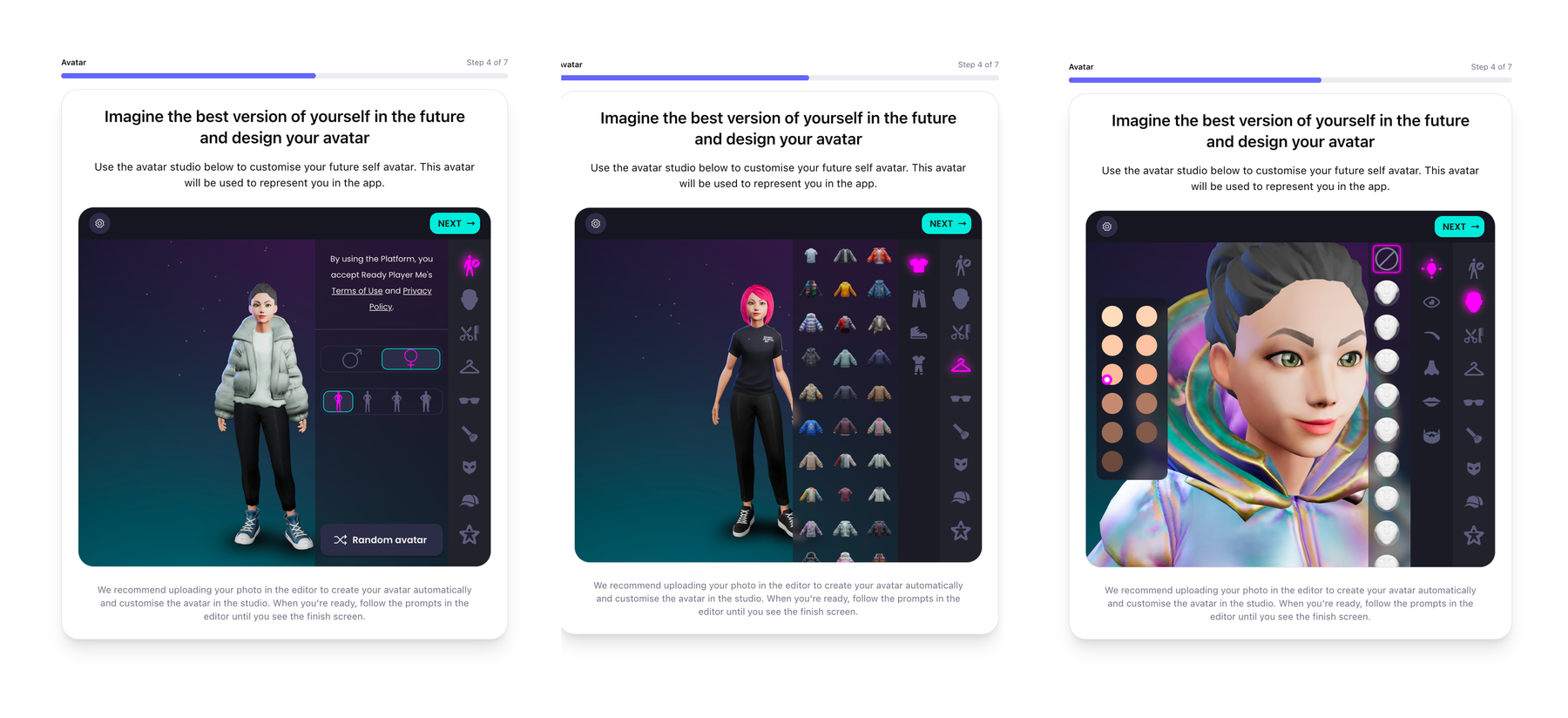
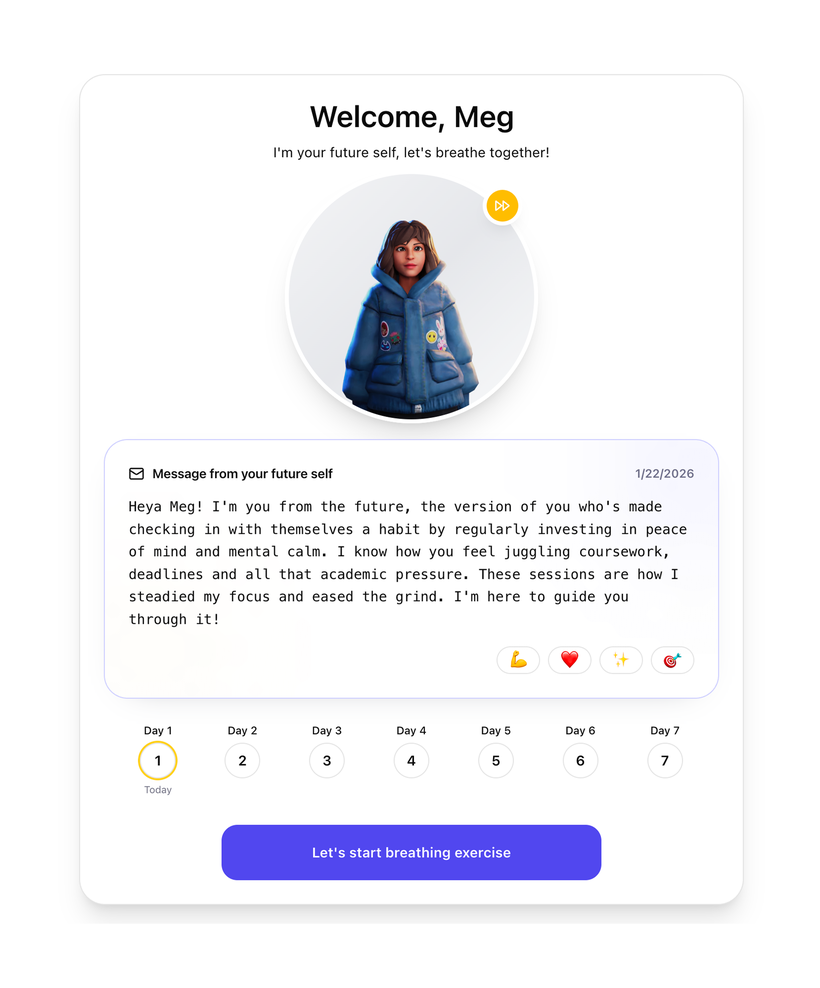
During onboarding, users create an avatar that represents a future version of themselves who has already built the breathing habit. Reminders then arrive as short messages from that avatar. I used Ready Player Me for the avatar creator and chose a stylised look so the character felt personal without trying to look completely realistic.
Users also choose what they want help with, such as exam stress, sleep, or staying calm during the day. The app matches messages to that selected goal using a simple set of rules. It does not track the user's mood or use a model to guess how they are feeling.
03
Designing and building the app
I built FutureBreath as a web app so participants could join the study by opening a link instead of installing anything. The home screen shows a short message from the future-self avatar and a small streak counter. I kept the interface focused on starting the next session rather than showing users a busy wellness dashboard.
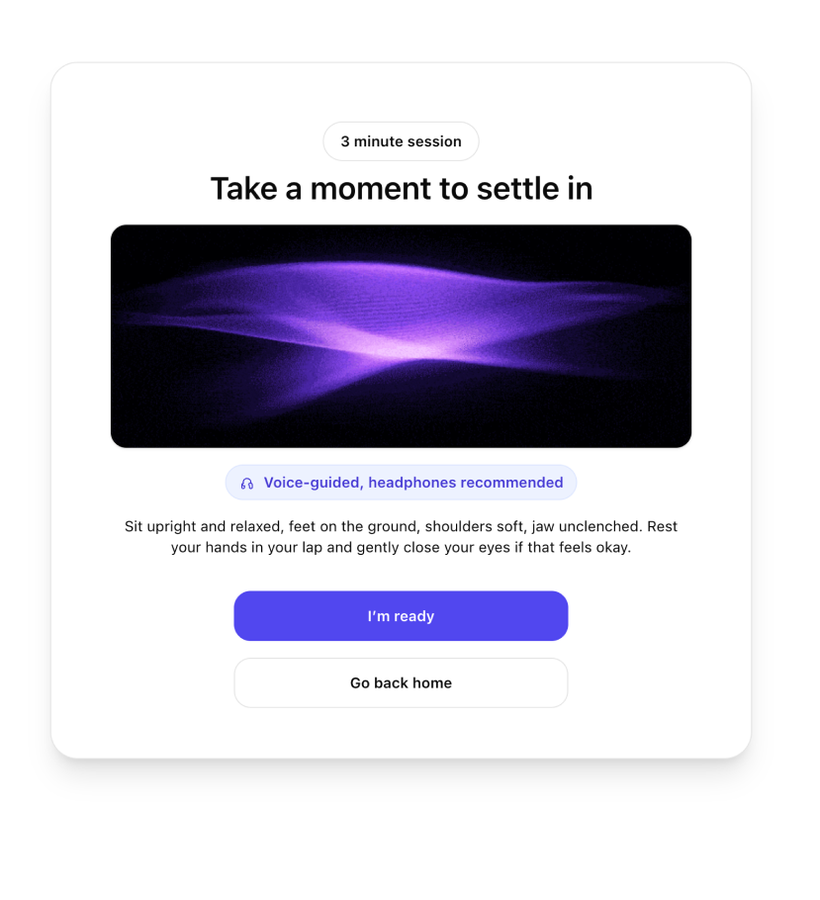
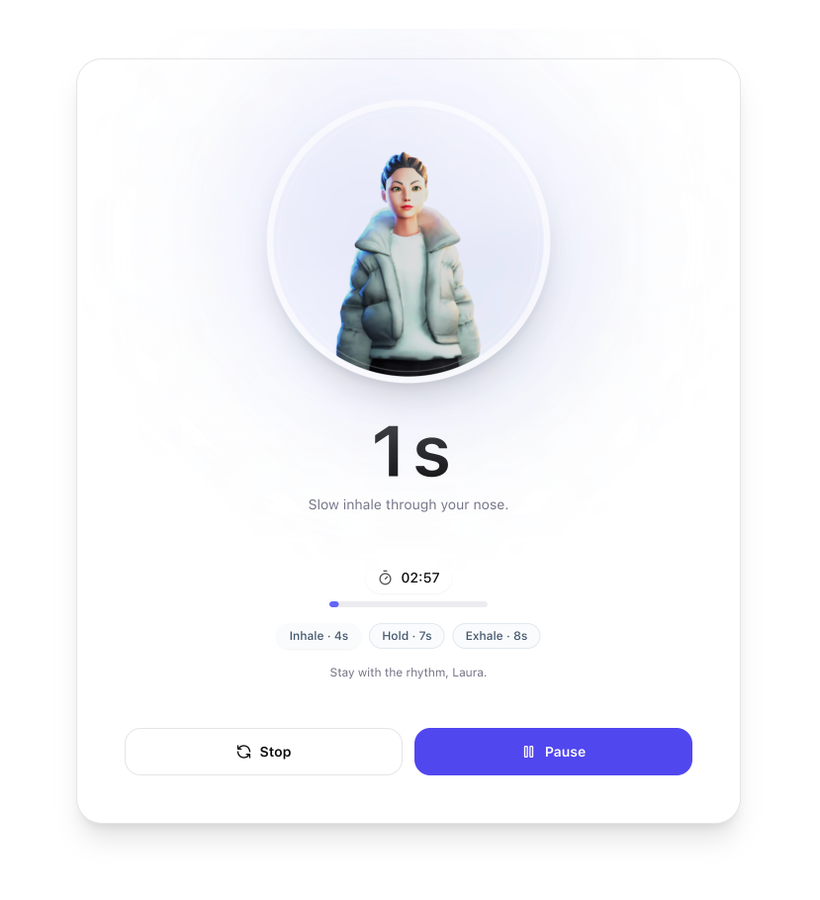
The main exercise is a three-minute 4-7-8 breathing session with voice guidance. Users rate their stress with one tap before and after each session, which allowed me to measure the immediate change without adding a long questionnaire every time.
04
Message history and settings
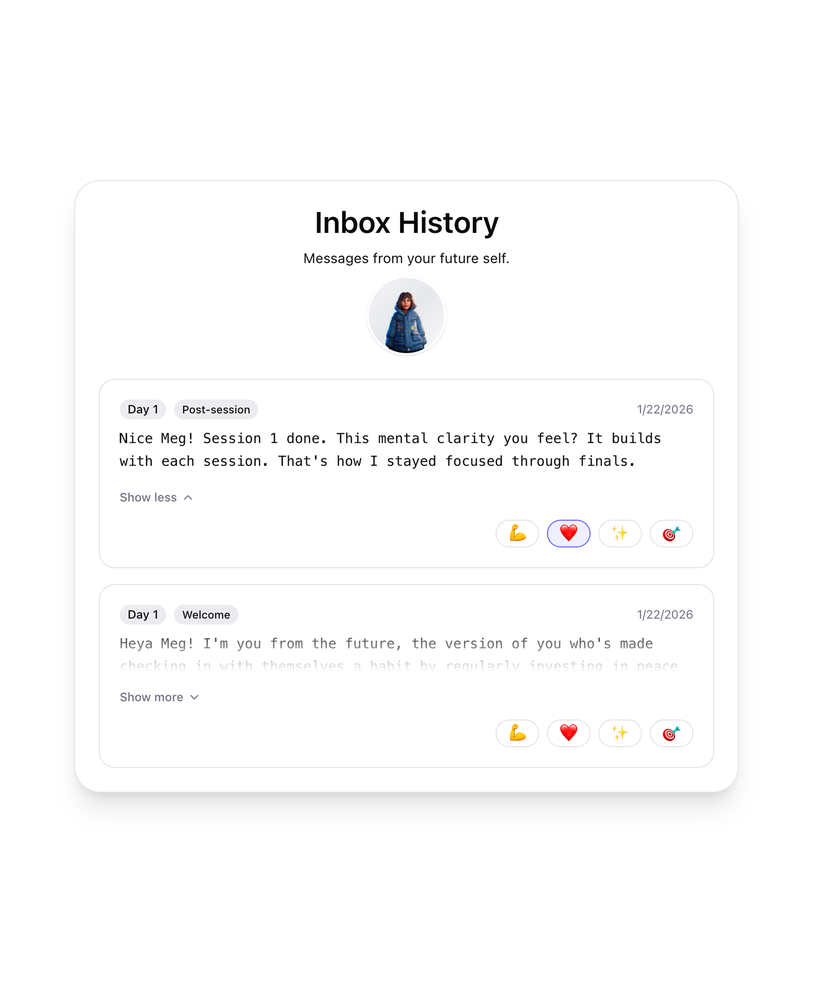
Previous messages are saved in an inbox where users can read them again and react to them. This makes the messages part of the app instead of disposable notifications that disappear after being opened.
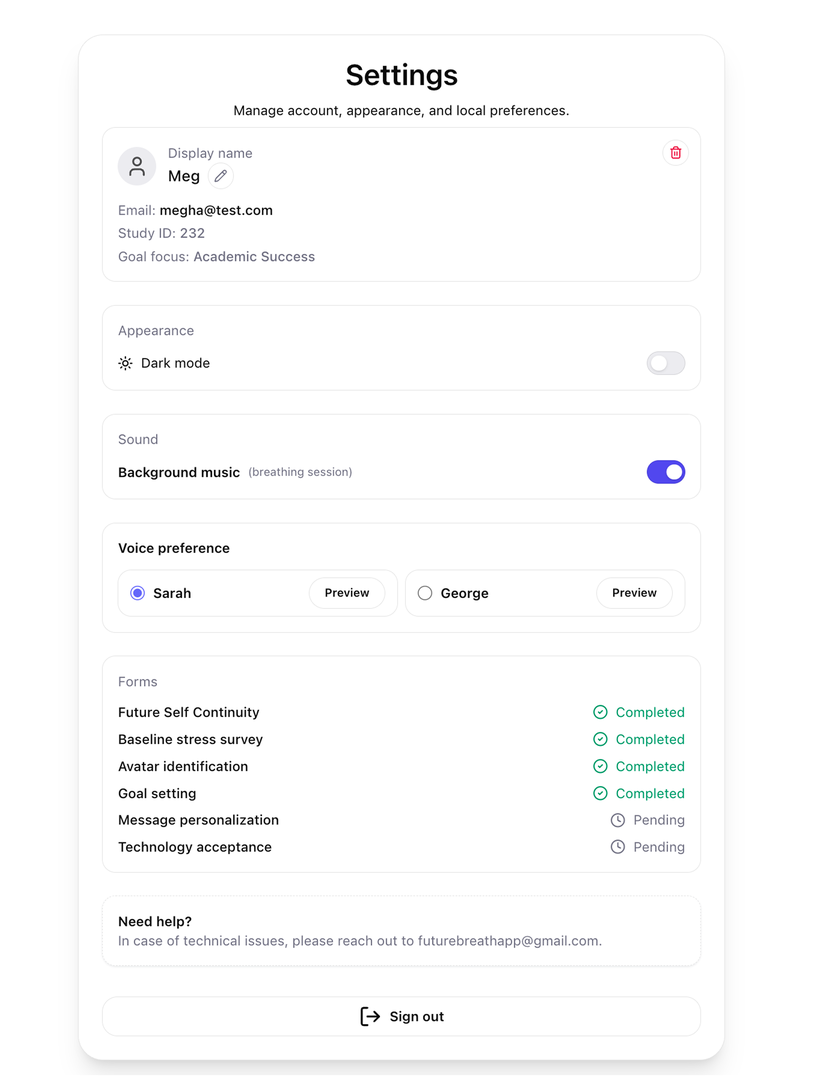
I kept the settings limited to useful controls such as theme, voice, music, and session history. The aim was to give people enough choice to make the experience comfortable without distracting them from the breathing exercise.
05
Testing it with participants
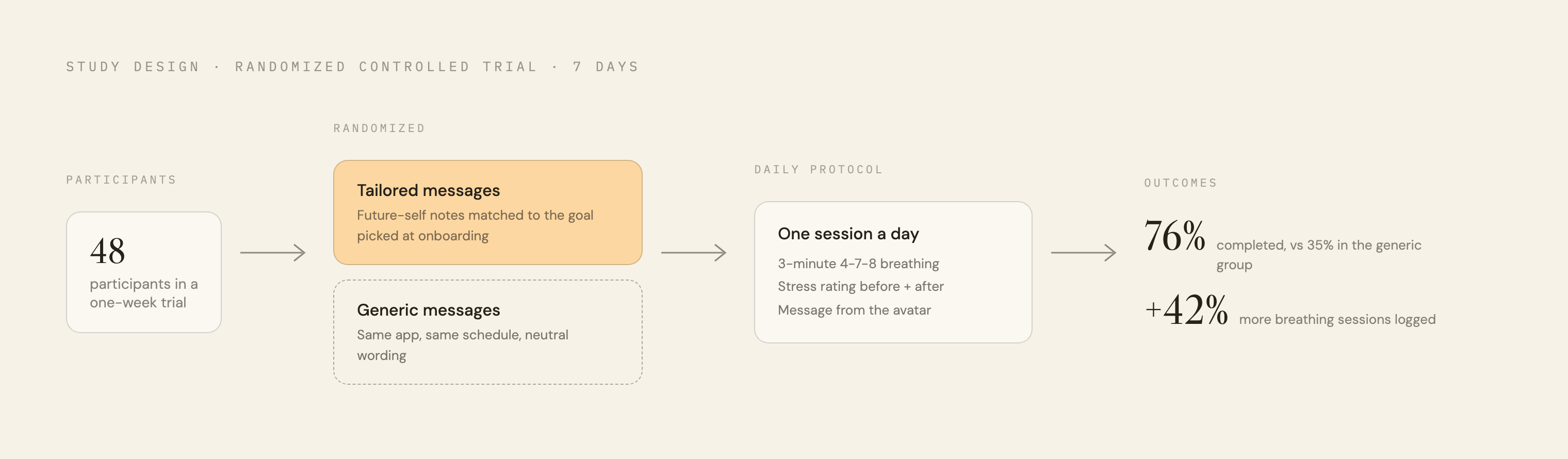
I evaluated FutureBreath in a seven-day randomized controlled study with 48 participants. Both groups used the same app and followed the same breathing sessions. The only difference was the messaging: one group received messages tailored to their selected goal, while the other received generic messages.
In the tailored group, 76% of participants completed the study, compared with 35% in the generic group. They also completed around 42% more breathing sessions. Stress ratings dropped by 9.4 points on average during individual sessions. Overall stress across the full week did not show a meaningful change, so the result supports better engagement and short-term stress relief rather than a broader claim about long-term stress.
06
What I learned
The study showed me how much the wording and context of a message can affect whether someone returns to a product. Both groups used the same interface, features, and session schedule, but the tailored messages led to much stronger participation.
I came away from the project treating product copy as part of the user experience, not something added after the screens are finished. A message that connects to a person's own goal can sometimes influence behaviour more than adding another feature.