SiteRelay.
I designed and built SiteRelay, a field-first construction ERP for small Indian builders. Grounded in on-site research, it turns a two-minute daily report into a reliable project record, giving owners visibility without follow-up calls.
01
The problem
Small and mid-size Indian building contractors run two to ten sites at once, and the owner's day disappears into phone calls asking what happened on each one. Photos scatter across WhatsApp groups, labour counts get remembered wrong, and delays surface late. Nobody in this market wakes up wanting software, so the product had a single promise to earn: know exactly what happened on site today, without a follow-up call.
02
I started at the site, not the office
Most construction software is built for the office and pushed onto the field as extra admin, which is precisely why engineers ignore it. I inverted that. The daily field report is the wedge: if the person on the ground can file it in under two minutes, the photo-backed record it creates becomes data the rest of the company can trust. Every downstream feature stands on that one habit, so the design effort went there first.
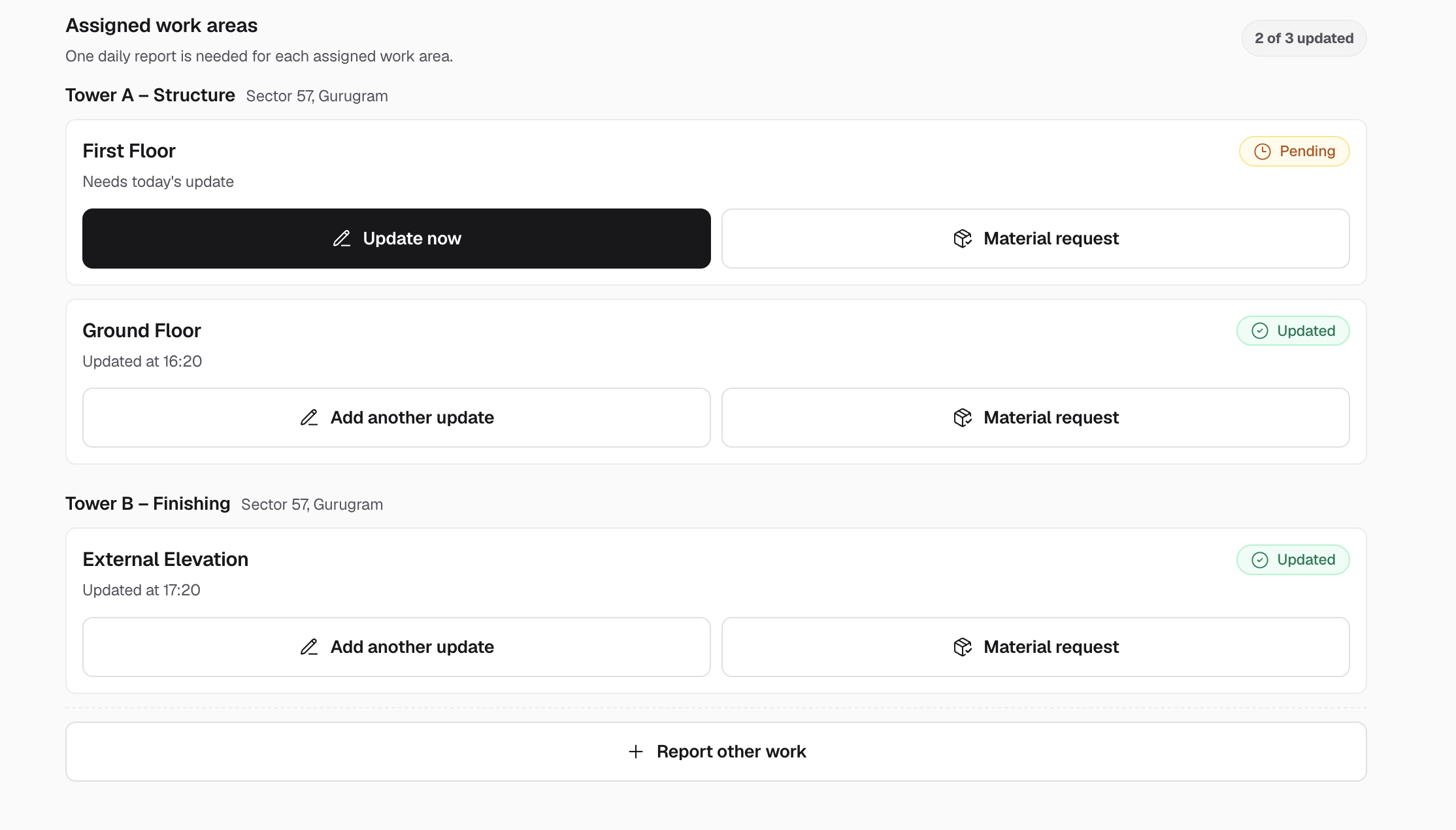
The engineer's home
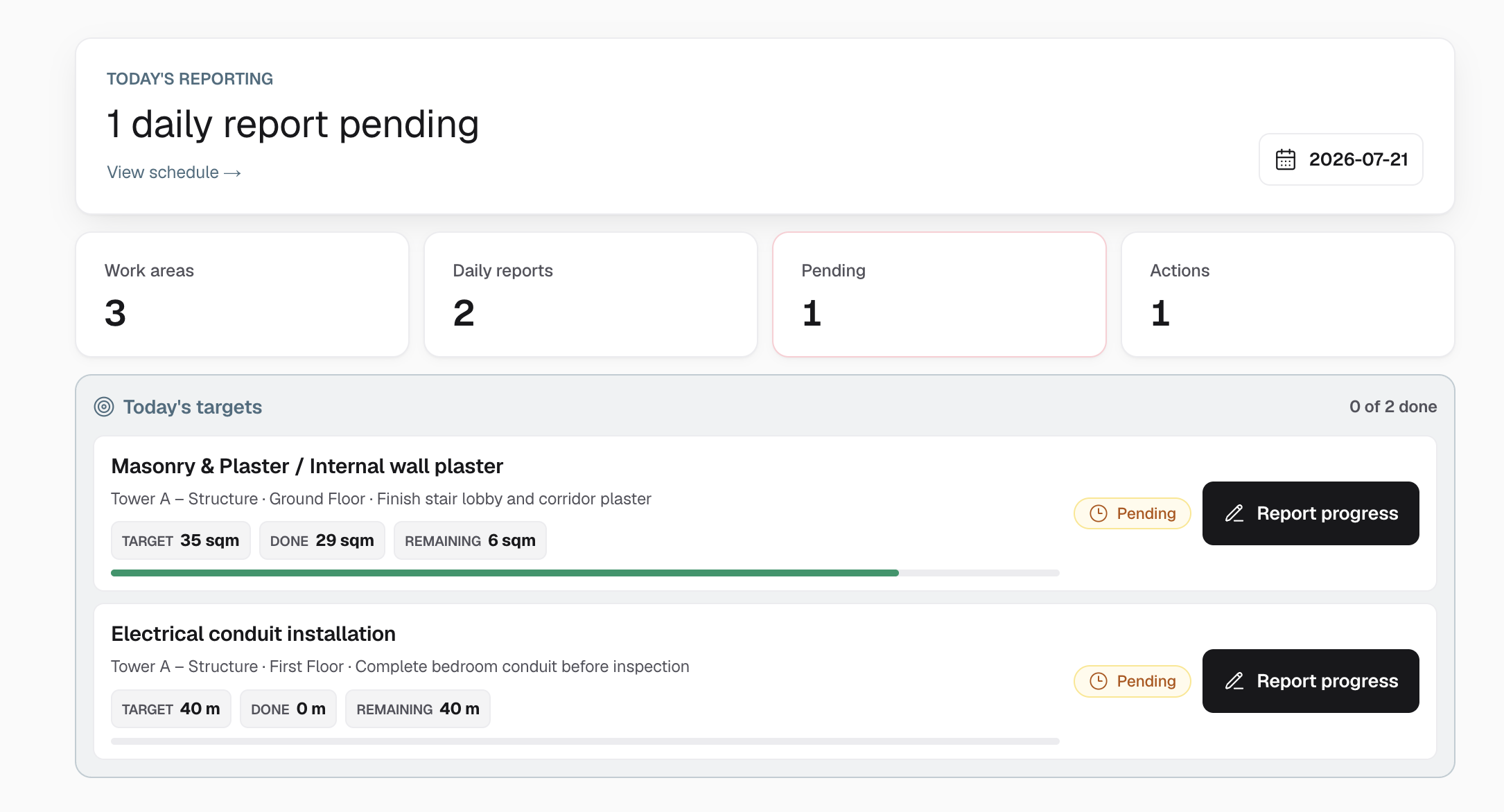
One report per work area
03
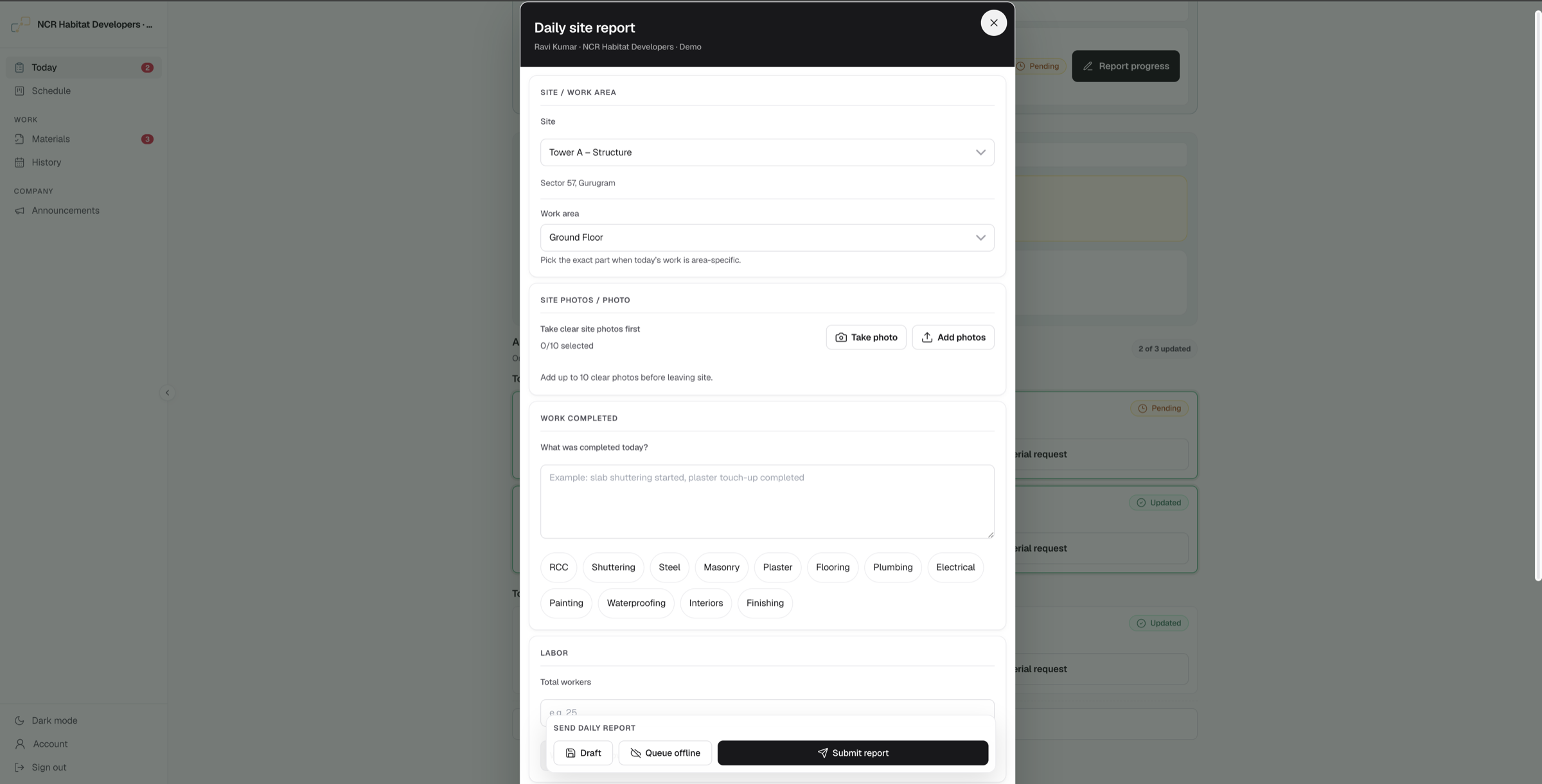
The flagship flow: one daily report
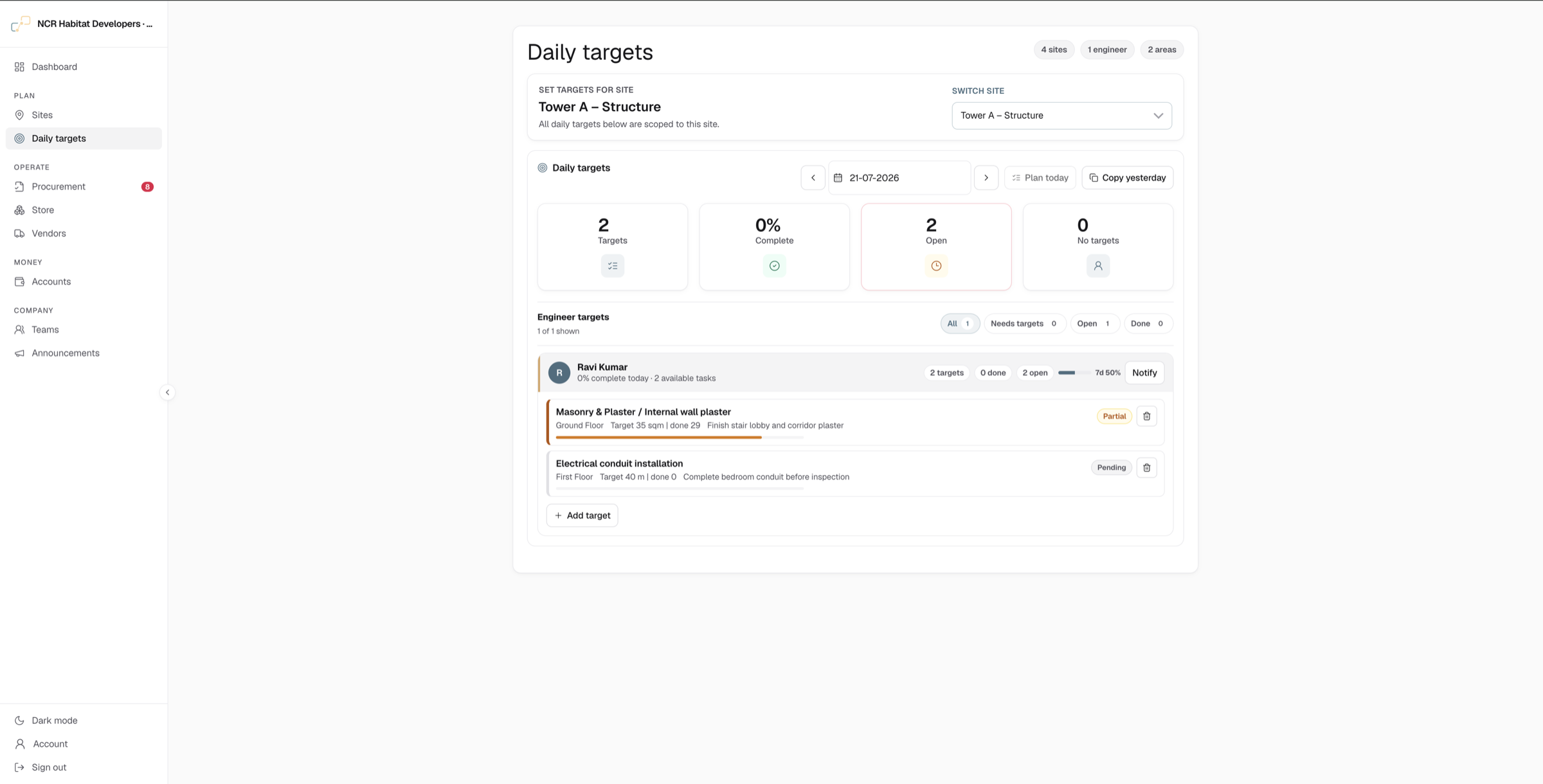
The site engineer opens a single form and files the day in a few taps. Only three things are required, the site, the work area, and a short note on what got done; the worker breakdown, tomorrow's plan, and any blocker sit collapsed behind optional sections so the form stays lighter than WhatsApp. Photos are the proof, up to ten per update, and camera shots get the IST time and GPS burned into the pixels so the evidence survives being forwarded. Because sites often have dead signal, an on-device queue holds the whole report, photos included, and syncs itself the moment any signal returns, so a day's work is never lost.
04
One screen ends the phone calls
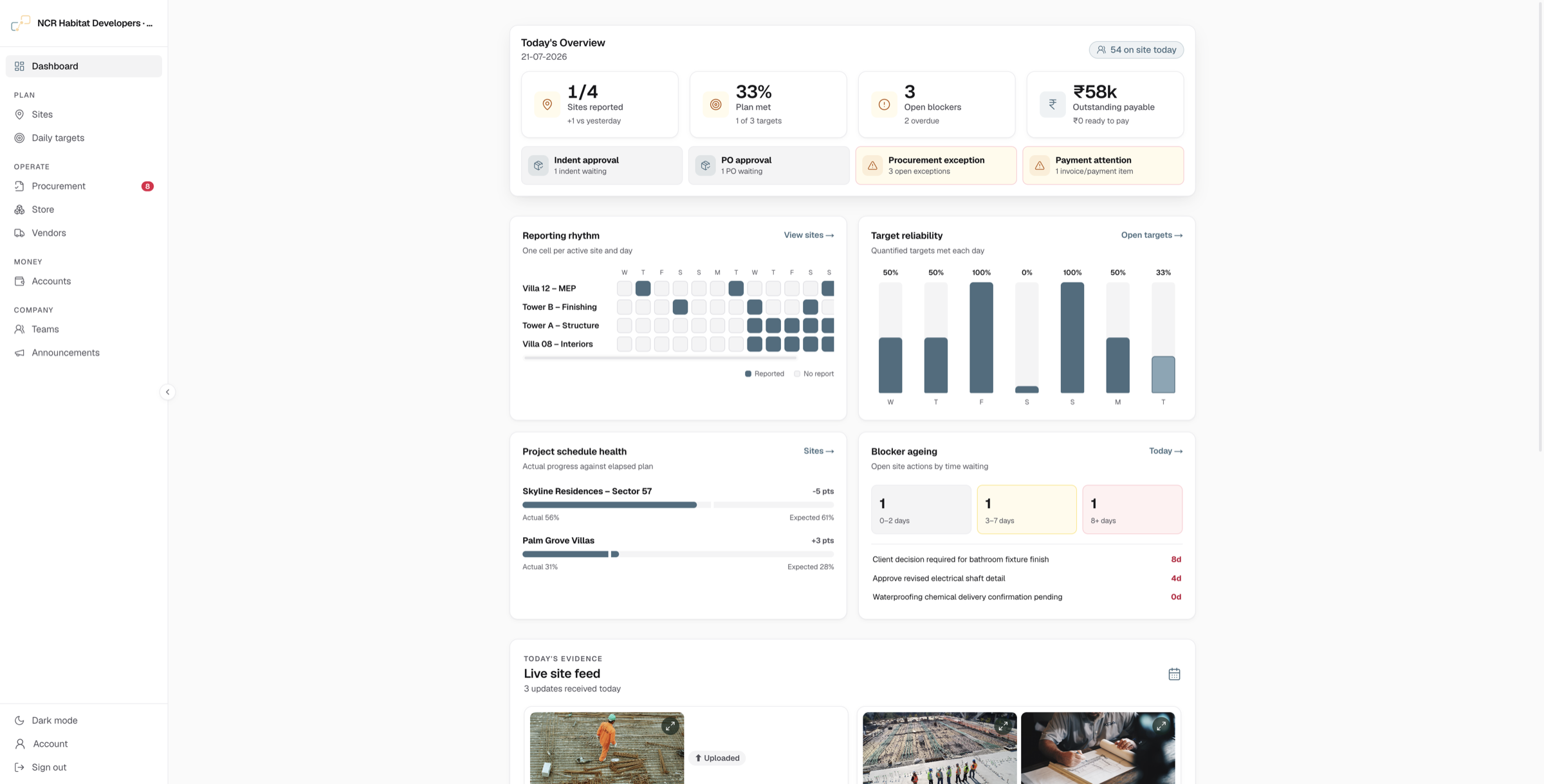
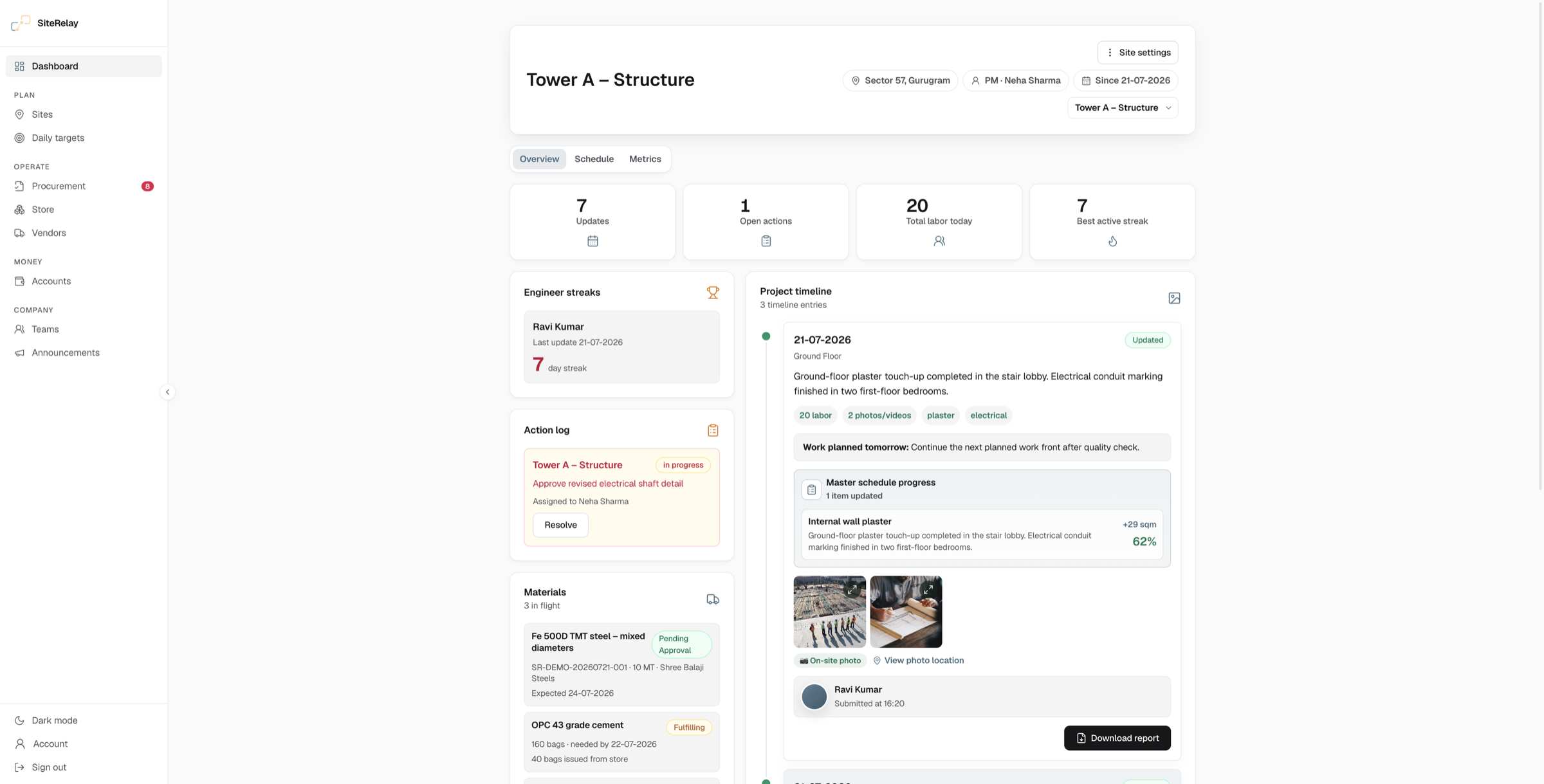
The owner lands on one screen that answers what happened today across every site in seconds: how many sites reported, whether the plan was met, which blockers are open, and what money is due. The feed is image-first, actual site photos tagged as camera or upload with a location link, not text claims. A reporting-rhythm heatmap makes silence visible, so the owner can see which site went quiet without calling to find out, the exact thing a follow-up call used to confirm. Every site also keeps a timeline back to its first day, and any day can go out as a PDF or a WhatsApp digest, so the owner or their client receives the proof without asking.
05
Built all the way to the money
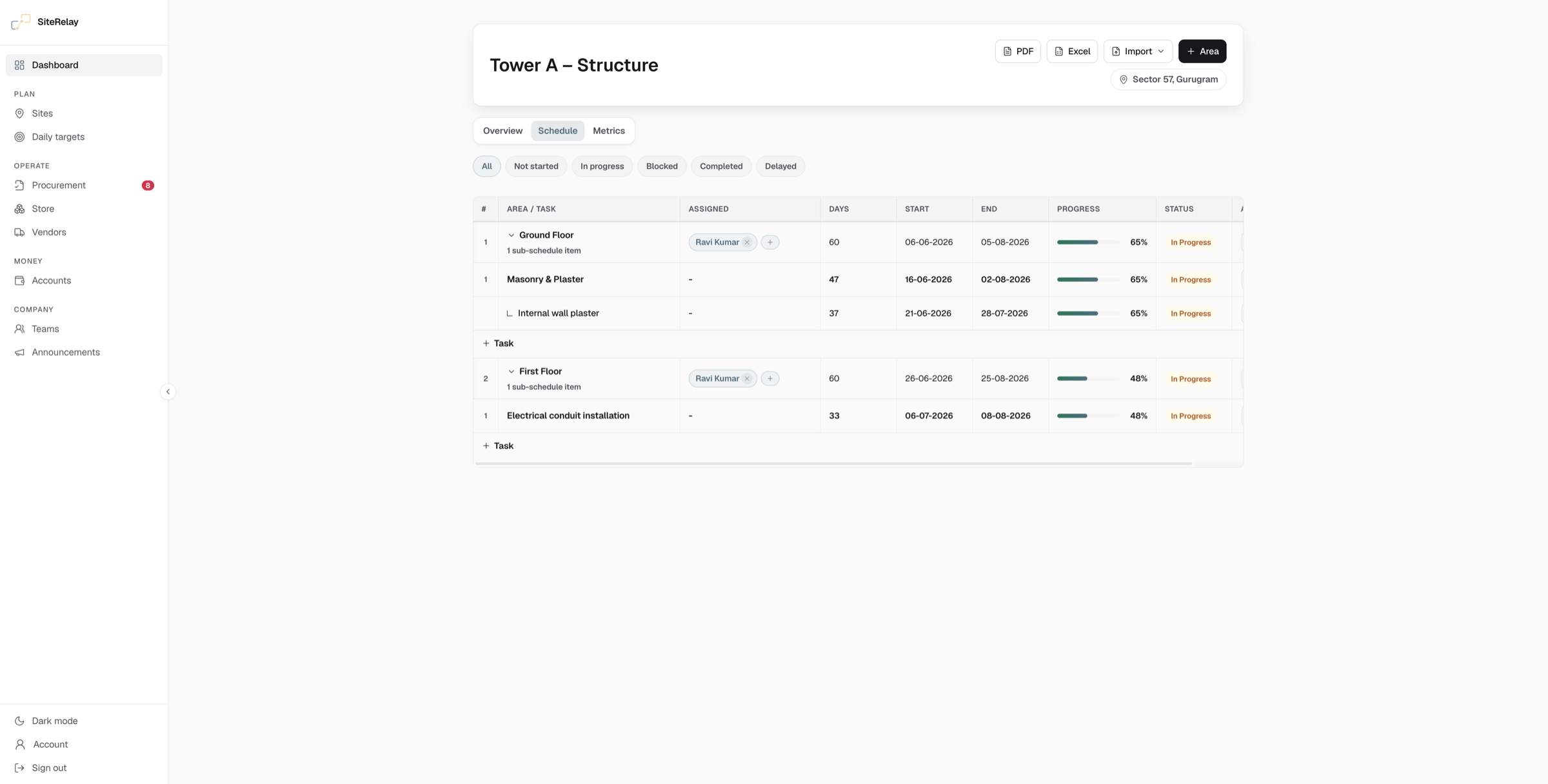
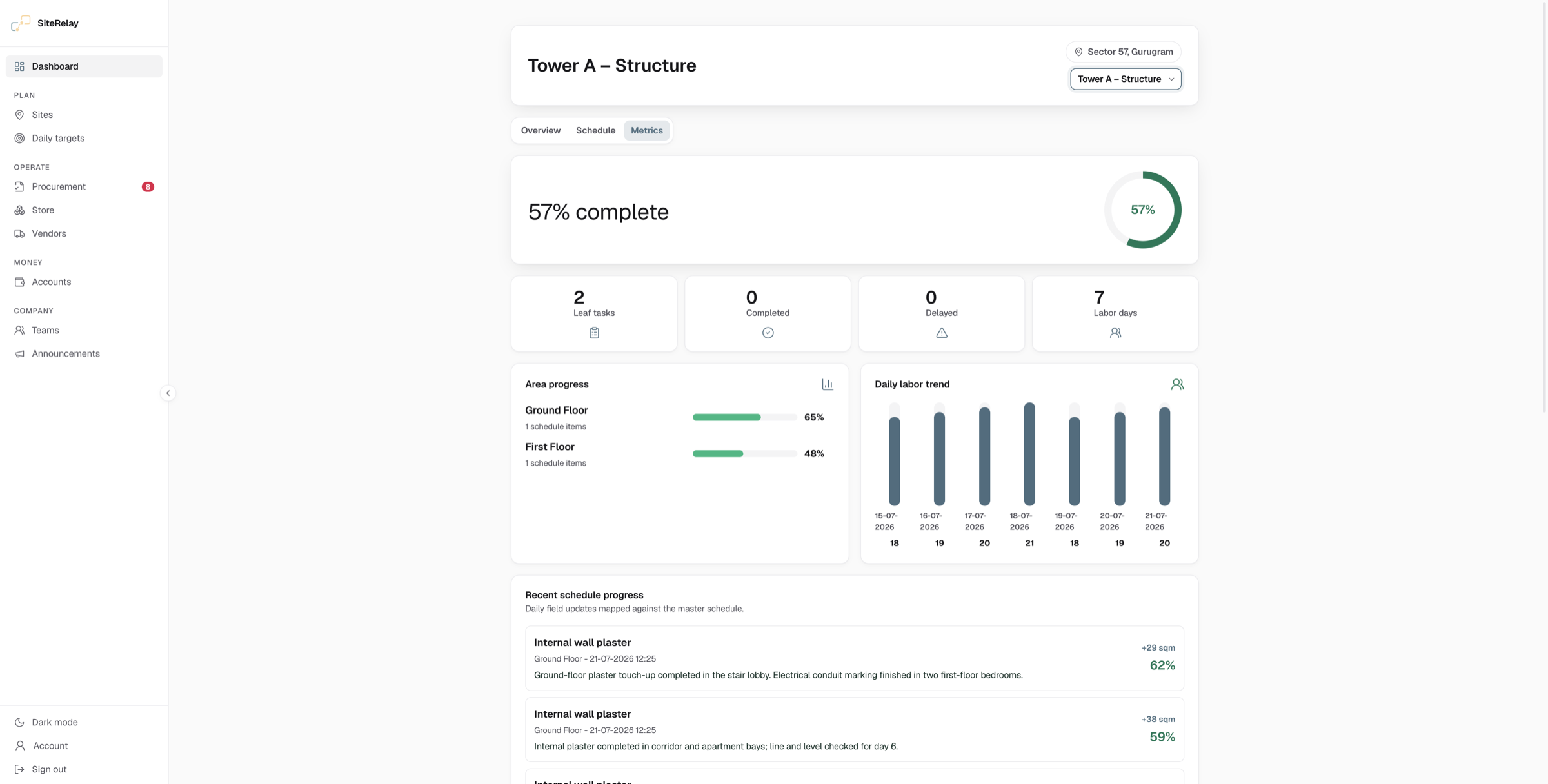
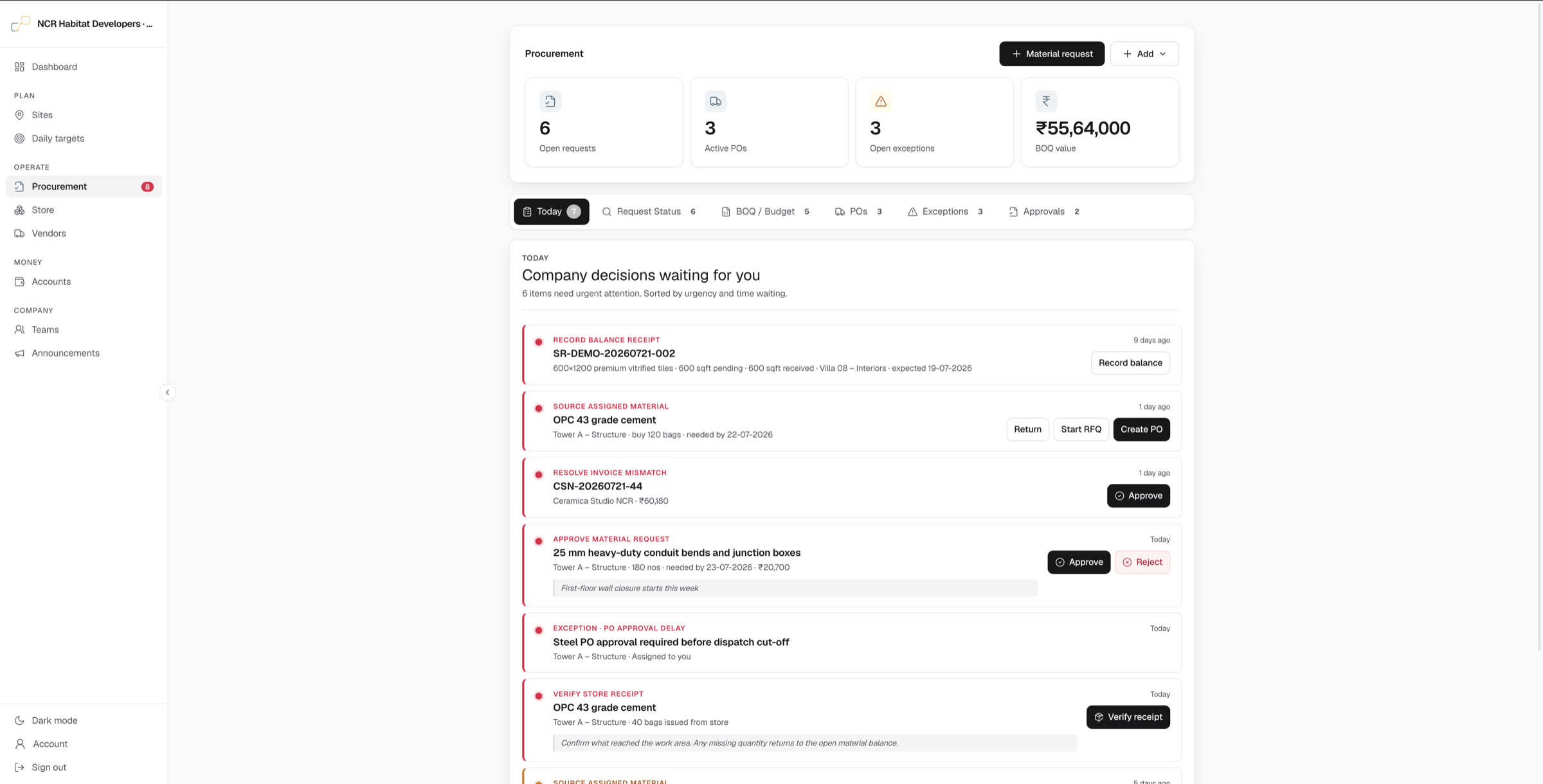
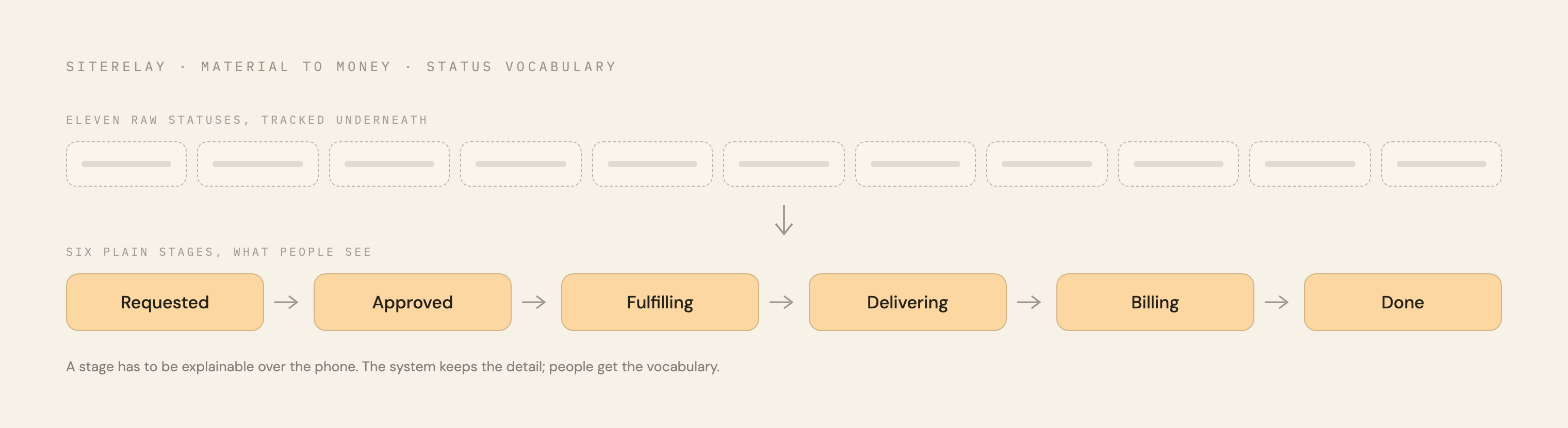
The report is the wedge, not the whole product. Behind it sits a planning schedule, from site to work area to task to sub-task, that daily progress reports against, so owners see planned against actual. A full material-to-money pipeline runs from a site engineer's request, through a signed approval and a store-versus-buy decision, to purchase orders with a three-way match, invoices, and payment. I kept every step traceable to a site, an area, and an approved demand instead of a disconnected back-office register. The system tracks eleven raw statuses underneath, but people see six plain stages: Requested, Approved, Fulfilling, Delivering, Billing, Done. Vocabulary is a design surface too, and this was the single change that made the pipeline explainable over the phone.
06
Everyone sees only their own work
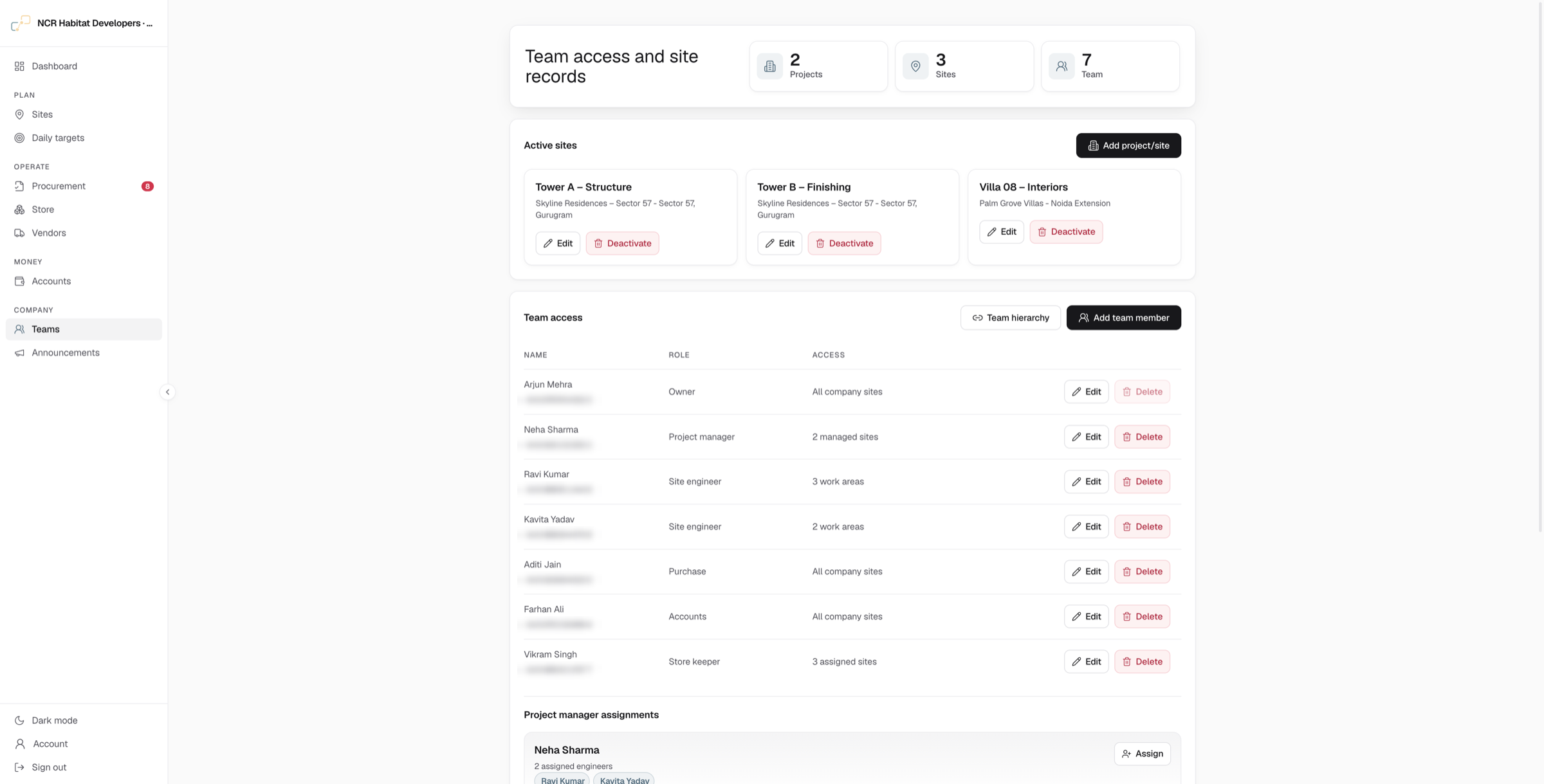
A company has seven roles, and each one lands on a home built for its job. The owner sees every site, a project manager runs only assigned sites, an engineer sees only assigned areas, and purchase, accounts, and the store keeper each get a focused queue rather than a full ERP menu, with vendor prices and payment amounts hidden from the field. The trust reaches outside the company too: an owner can hand a client a revocable, 30-day link to a read-only site timeline that shows client-visible photos only, with no labor counts, no money, and no names.
07
The details that carry it
Small decisions did a lot of the work. The day's report can go out as a WhatsApp digest, the channel field teams already live in, instead of one more app to open. The site vocabulary is real, RCC, shuttering, mason, helper, written as plain hints in the data model instead of jargon. And there is no mental math: enter a worker breakdown and the total sums itself and locks, so a dashboard and a PDF can never disagree.
08
The result
SiteRelay carries a builder's day from the first site photo to the final payment, replacing follow-up calls, scattered WhatsApp groups, and back-office registers that never agreed with each other. It is a working product, tuned for weak networks and cheap phones in the field, with signed approvals and a three-way match underneath the money. The honest gap is language. The field form is still English-only while the engineer it has to win over often works in Hindi, and that is the next fix before I push for wider use.